
Wisdom Teeth Removal
Oral Examination
With an oral examination and x-rays of the mouth, Dr. Boghossian can evaluate the position of the wisdom teeth and predict if there are present or future potential problems. Patients are generally first evaluated in the mid-teenage years by their dentist, orthodontist, or by an oral and maxillofacial surgeon.
All outpatient surgery is performed under appropriate anesthesia to maximize patient comfort. Dr. Boghossian is trained, licensed, and highly experienced in providing various types of anesthesia for patients.
Why Should I Have My Wisdom Teeth Removed?
If you do not have enough room in your mouth for your third molars to fully erupt, a number of problems can happen. Impacted wisdom teeth should be removed before their root structure is fully developed. Therefore having them removed between the middle teenage years and early twenties is ideal.
Some of the possible problems related to not removing your wisdom teeth include:
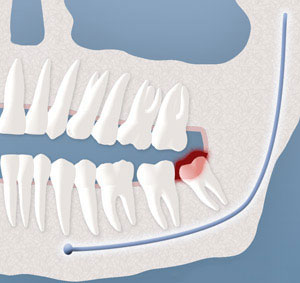
Infection:
The most frequent clinical problem we see is pericoronitis, (a localized gum infection). Without enough room for total eruption, the gum tissue around the wisdom tooth can become irritated and infected, resulting in recurrent pain, swelling, and problems with chewing and/or swallowing.
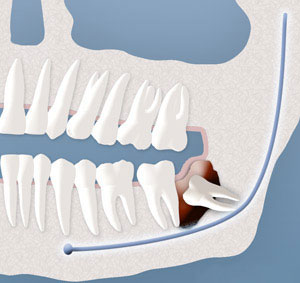
Cyst Formation:
Cysts are fluid-filled “balloons” inside the jaw bone that develop as a result of impacted teeth and slowly expand destroying adjacent jawbone and occasionally teeth. They can be very difficult to treat if your wisdom teeth are not removed in your teenage years. Although rare, tumors can be associated with the delayed removal of wisdom teeth.
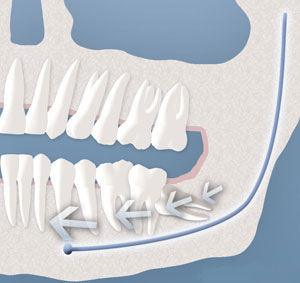
Crowding:
Impacted wisdom teeth may contribute to crowding of your teeth.
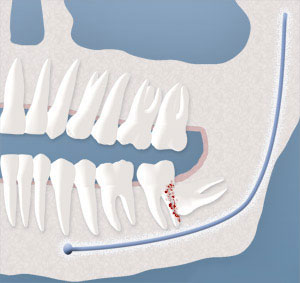
Damage to Adjacent Teeth:
If there is inadequate room to clean around the wisdom tooth (third molar), the tooth directly in front (second molar), can be adversely affected resulting in gum disease, bone loss around the tooth, and/or decay.
What If I Don’t Have My Wisdom Teeth Removed As A Teenager Or Young Adult?
As wisdom teeth develop, the roots become longer and the jawbone more dense. When it is necessary to remove impacted wisdom teeth in your thirties, or beyond, the post-operative course can be prolonged and there is a higher complication rate. Healing may be slower and the chance of infection can be increased. If your impacted wisdom teeth are not removed in your teenage years or early twenties and they are completely impacted in bone, it may be advisable to wait until a localized problem (such as cyst formation or localized gum disease and bone loss) develops.
What Happens On The Day Wisdom Teeth Are Removed?
You will be provided with appropriate anesthesia options at your consultation. These services are provided in an environment of optimum safety, utilizing modern monitoring equipment and a well trained, licensed, and experienced staff. The Surgical Care Team, the office facilities, and the doctors are inspected on behalf of the Board of Dental Examiners on a regular basis.
On the day of your procedure, you will take medications to help minimize post-operative pain and swelling. We ask that a parent or responsible adult accompanies you to the office and plans to stay with you the rest of the day. The procedure will take about 45 to 60 minutes and you will probably be in the office for 90 to 120 minutes. Recent advances in medicine and technology allow patients to undergo wisdom tooth removal in a manner, which promotes rapid healing and minimal post-operative discomfort. State of the art sterilization and infection control techniques are used at all times.
On the morning or afternoon of your surgery, it is essential that you have nothing to eat or drink (excluding prescription medications with a sip of water) starting midnight the night before the appointment. Having anything in your stomach can increase the risk for serious anesthetic complications, including nausea and vomiting. Your procedure will be rescheduled if you have not followed these guidelines. When you are seated in the surgical room, we will make every effort to make you as comfortable as possible. If you are going to be sedated, we will place an IV in your arm. Local anesthesia is given to you to ensure comfort. You will be sleepy for a significant portion of the day.
The local anesthesia may last until the following day. Once the local anesthesia wears off, you may require prescription pain medication. Dr. Boghossian will discuss pain medication options with you, suited for your particular case. We recommend starting your post-operative diet with soft foods such as jello and broths, gradually increasing in substance as your body permits. Dr. Boghossian’s surgical assistants will review specific instructions with you on the day of surgery.
If your surgery requires stitches, these are usually the type that dissolve in 3 to 5 days and do not require removal. You may also notice a sensation of your gums feeling swollen and pulling away from your teeth. This is all part of the normal recovery, and will subside in several days.
If you are given antibiotics and you take birth control pills, please be aware that the birth control pills might become ineffective and take appropriate precautions.